Building information modeling definition
Hem / Teknik & Digitalt / Building information modeling definition
Why does connecting BIM with FM platforms matter today?
Because it closes the loop between design, construction, and operations. It significantly shortens review cycles and improves coordination among design and construction teams.
2. When working at this level of BIM, project owners can track and determine what costs will be incurred during the length of the project.
Facility teams can use the same model to plan maintenance, track assets, and manage daily operations, keeping the building efficient and easier to run long after construction is complete.
How BIM works?
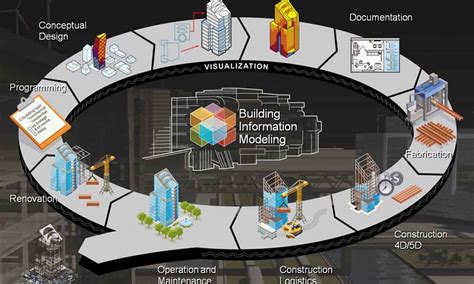
Building Information Modeling (BIM) brings together 3D design, data intelligence, and process collaboration to create a single digital model of a building.
Each level represents a different set of criteria that demonstrates a particular level of ‘maturity.’ BIM levels start with 0 and go to 4D, 5D, and even 6D BIM. The purpose of these levels is to gauge how effectively, or how much information is being shared and managed throughout the entire process.
So what does each level involve, and how can you identify which at which level you’re working?
When multiple disciplines—structural, architectural, mechanical, electrical, plumbing—work on the same project, conflicts are inevitable. They bridge the gap by:
- Converting 2D drawings to BIM models
- Providing BIM coordination services for contractors who lack in-house capabilities
- Offering trained BIM personnel on a project basis
- Managing the CDE and coordination process
For firms not ready to fully commit to BIM internally, outsourcing to specialists provides BIM benefits without the overhead of permanent staff and software licenses.
Level of Development (LOD) defines how much detail a BIM model contains at each project stage.
What is Building Information Modeling (BIM)?
BIM is a digital process for creating and managing detailed 3D models that represent both the physical and functional characteristics of a building. What are the benefits of integrating BIM with CAFM or CMMS?
- Centralized access to all building and asset data.
- Automated maintenance scheduling and task tracking.
- Accurate asset information for better planning and budgeting.
- Visual access to asset location and condition through 3D models.
- Improved collaboration between design, operations, and maintenance teams.
5.
However, the way in which stakeholders exchange information differentiates it from other levels.
Benefits of Level 3 BIM are:
Better 3D visualization of the entire project
Easy collaboration between multiple teams and trades
Simplified communication and understanding of design intention
Reduced rework and revisions at every stage of the project
Levels 4, 5, and 6 BIM: adding in scheduling, cost and sustainability information
BIM level 4 brings a new element into the information model: time.
What challenges come with BIM and FM integration?
Common challenges include keeping BIM models updated post-construction, ensuring data consistency, and achieving smooth interoperability between platforms. This ensures version control, reduces errors, and eliminates disconnected information silos.
🏢
What is Common Data Environment (CDE)?
A Common Data Environment is a shared digital space where all project information—designs, documents, and models—is stored, managed, and updated in real time.
As BIM becomes increasingly more sophisticated, 4D, 5D, and even 6D BIM will start to play a part in the process.
More and more, stakeholders are walking through BIM models using augmented and virtual reality. This integration helps every stakeholder, from developers to facility operators, turn design intelligence into ongoing operational performance.
Here’s how different groups benefit:
1.
Instead of manually measuring drawings, estimators can query the model for quantities—cubic meters of concrete, linear meters of piping, square meters of cladding.
When linked to cost databases, this becomes 5D BIM—enabling real-time cost tracking as the design evolves. Centralized data management:
All project data is stored in a Common Data Environment (CDE) — a shared repository that synchronizes updates across teams.
This allows the model to remain consistent and coordinated throughout the entire process so that structural engineers, architects, MEP engineers, designers, project managers, and contractors can work in a more collaborative environment.
Example of a BIM object: Optibal W6 ball valve with Actuator - downloaded from the manufacturer and used by plumbing engineers in their BIM models.
The “I” in BIM
BIM, as a whole, refers to the process of all parties involved in the construction and lifecycle management of built assets, working collaboratively and sharing data.
Now, BIM (Building Information Modeling) is the standard— but it is much more than just a 3D model.
BIM objects
BIM objects, the components that make up a BIM model, are intelligent, have geometry, and store data. When BIM is layered with the principles of Connected Construction, the dream of BIM becomes an achievable reality.
Trimble is joining forces with industry leaders in architecture, engineering, and construction to put Connected Construction to the test in The Great Library docuseries.
Today, most of the industry is working above this level, although not every professional in the industry has sufficient BIM training and some projects do not include the use of BIM in contract specifications.
Level 1 BIM: 2D construction drawings + some 3D modeling
Using 3D CAD for concept work, but 2D for drafting production information and other documentation, probably means you're working Level 1 BIM.
At this level, CAD standards are managed to the standard of BS 1192:2007, and electronic sharing of data carried out from a common data environment (CDE) usually managed by the contractor. No more scattered spreadsheets or manual record searches — everything you need is right there.
2.
Later on, CAD turned 3D, which brought more realistic visuals to blueprints.
BIM is a digital process for creating and managing detailed 3D models that represent both the physical and functional characteristics of a building. What are the benefits of integrating BIM with CAFM or CMMS?
- Centralized access to all building and asset data.
- Automated maintenance scheduling and task tracking.
- Accurate asset information for better planning and budgeting.
- Visual access to asset location and condition through 3D models.
- Improved collaboration between design, operations, and maintenance teams.
5.
However, the way in which stakeholders exchange information differentiates it from other levels.
Benefits of Level 3 BIM are:
Better 3D visualization of the entire project
Easy collaboration between multiple teams and trades
Simplified communication and understanding of design intention
Reduced rework and revisions at every stage of the project
Levels 4, 5, and 6 BIM: adding in scheduling, cost and sustainability information
BIM level 4 brings a new element into the information model: time.
What challenges come with BIM and FM integration?
Better 3D visualization of the entire project
Easy collaboration between multiple teams and trades
Simplified communication and understanding of design intention
Reduced rework and revisions at every stage of the project
Common challenges include keeping BIM models updated post-construction, ensuring data consistency, and achieving smooth interoperability between platforms. This ensures version control, reduces errors, and eliminates disconnected information silos.
🏢
What is Common Data Environment (CDE)?
A Common Data Environment is a shared digital space where all project information—designs, documents, and models—is stored, managed, and updated in real time.
As BIM becomes increasingly more sophisticated, 4D, 5D, and even 6D BIM will start to play a part in the process.
More and more, stakeholders are walking through BIM models using augmented and virtual reality. This integration helps every stakeholder, from developers to facility operators, turn design intelligence into ongoing operational performance.
Here’s how different groups benefit:
1.
Instead of manually measuring drawings, estimators can query the model for quantities—cubic meters of concrete, linear meters of piping, square meters of cladding.
When linked to cost databases, this becomes 5D BIM—enabling real-time cost tracking as the design evolves. Centralized data management:
All project data is stored in a Common Data Environment (CDE) — a shared repository that synchronizes updates across teams.
This allows the model to remain consistent and coordinated throughout the entire process so that structural engineers, architects, MEP engineers, designers, project managers, and contractors can work in a more collaborative environment.
Example of a BIM object: Optibal W6 ball valve with Actuator - downloaded from the manufacturer and used by plumbing engineers in their BIM models.
The “I” in BIM
BIM, as a whole, refers to the process of all parties involved in the construction and lifecycle management of built assets, working collaboratively and sharing data.
Now, BIM (Building Information Modeling) is the standard— but it is much more than just a 3D model.
BIM objects
BIM objects, the components that make up a BIM model, are intelligent, have geometry, and store data. When BIM is layered with the principles of Connected Construction, the dream of BIM becomes an achievable reality.
Trimble is joining forces with industry leaders in architecture, engineering, and construction to put Connected Construction to the test in The Great Library docuseries.
Today, most of the industry is working above this level, although not every professional in the industry has sufficient BIM training and some projects do not include the use of BIM in contract specifications.
Level 1 BIM: 2D construction drawings + some 3D modeling
Using 3D CAD for concept work, but 2D for drafting production information and other documentation, probably means you're working Level 1 BIM.
At this level, CAD standards are managed to the standard of BS 1192:2007, and electronic sharing of data carried out from a common data environment (CDE) usually managed by the contractor. No more scattered spreadsheets or manual record searches — everything you need is right there.
2.
Later on, CAD turned 3D, which brought more realistic visuals to blueprints.